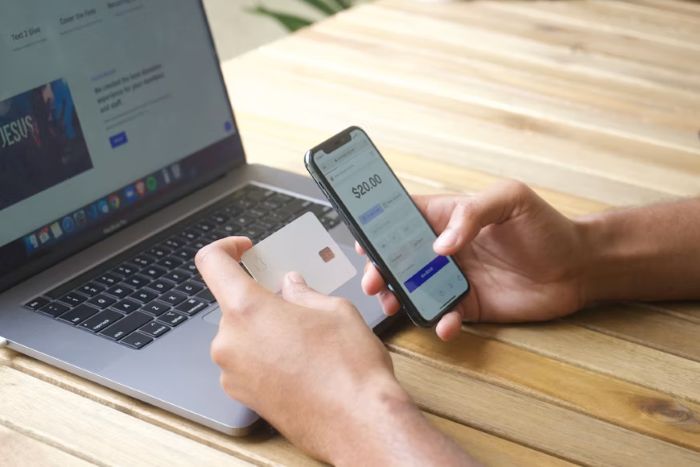
Want to send money without the long wait and the painful fees?
For decades, if you wanted to send money from point A to point B, it used to mean slow transactions, hidden fees and visiting your local bank branch. Times have changed…
Financial technology has turned it all upside down. With fintech services now you can send money contactlessly within seconds right from your phone. Usually for a fraction of what banks charge.
Here’s the best part:
You don’t have to be tech savvy to use it. For something simple to begin with, this guide to sending money with mobile wallets outlines the process of sending money contactlessly from your phone.
None of this stuff is magic. It’s literally just a few clever tweaks to how money flows. Here is a crystal clear breakdown of how fintech made transfers lightning fast and virtually free.
Let’s jump in!
What You’ll Discover:
- Why Old-School Transfers Cost So Much
- How Fintech Makes Transfers Cheaper
- The Speed Factor: Days To Seconds
- Why Mobile Wallets Are Leading The Way
- Keeping Your Money Safe
Why Old-School Transfers Cost So Much
Traditional money transfers were never built for speed or savings.
Consider this. When you wire money through a bank there are multiple middlemen involved before that money reaches the other recipient. Each step incurs a fee and takes time.
And it gets worse…
Sending money through banks remains the most expensive option. According to the World Bank, the global average cost of remittance is 6.36%. That percentage can end up being quite a bit of money on a larger transaction.
So where did all that cost come from? A few places:
- Correspondent banks taking a cut along the way
- Poor exchange rates hidden in the “free” transfer
- Flat fees that punish smaller amounts
The infuriating part is that most of these fees are concealed from you. You don’t know you got a bad exchange rate until the funds arrive and it’s less than you thought it would be. That opaqueness was banks’ modus operandi for decades.
That’s the old way. Fintech does it very differently.
How Fintech Makes Transfers Cheaper
Fintech companies skip the messy middle.
They don’t send your money through a network of other banks. They send it through their own electronic systems directly. Less steps. Fewer fees. Plain and simple.
Here’s why it matters:
A contactless transfer via an app can cost just a fraction of a bank wire. According to the World Bank, fully digital transfers average just 3.29%, about half the global average.
That gap is huge when you send money often.
Here’s another way fintech is less expensive: competition. There are dozens of apps vying for your business, and that competition helps keep prices low and features high. When one app lowers its fees, the others must comply or watch you walk.
Also most fintech apps present you with the total cost upfront before you make a payment. No hidden surprises here. See the fee. See the exchange rate. See what you are actually sending…all on one screen.
The outcome? You and the recipient of your money both get to keep more of it.
The Speed Factor: Days To Seconds
Cost is only half the story. Speed is where fintech really shines.
A bank wire can take 1-5 business days to clear. If you were waiting on rent money or an emergency fund, those days were torture. Plus if there was an error, you usually didn’t know until days afterwards.
A contactless money transfer changes that completely.
Fintech apps are settling transfers in minutes, sometimes seconds. Whenever you want. 24/7. No bank hours. No weekend waits. You tap, they receive, instantly.
Why is it so fast?
- Money moves over instant digital rails, not slow bank systems
- Everything happens on a phone, so there’s no paperwork
- Automation handles the checks in the background instantly
It’s enormous. Something that used to take days now occurs before you’ve even replaced your phone in your pocket. And since it never sleeps, a payment sent at midnight on Sunday night arrives in the same amount of time as one sent at 8am on Monday.
Why Mobile Wallets Are Leading The Way
Mobile wallets are the engine behind this whole change.
With your cards and cash stored safely in your digital wallet on your phone, contactless money transfers are just a tap away. No card numbers to enter. No trip to the branch.
And customers love them. Approximately 4.5 billion consumers worldwide (54.9%) utilized a digital wallet in 20 25. That isn’t a fad — that’s normal now.
Tap-2-pay is also everywhere. Over 75% of payments transacted across Mastercard’s network last 20 25 were contactless. Users have just become accustomed to pay and sending money with one tap.
Here’s what makes mobile wallets so powerful:
- They work across borders without extra cards
- They connect straight to fintech transfer apps
- They put speed and low cost in one place
There is also no cumbersome configuration process. You connect a card, and from then on a contactless payment only requires a few taps to initiate. This convenience is one reason these apps have exploded in popularity.
Put simply, the phone in your pocket is now a full money-sending tool.
Keeping Your Money Safe
Fast and cheap sounds great. But is a contactless money transfer actually safe?
The short answer is yes.
Fintech apps employ bank-grade security around every transaction. Many layer additional protections on top that legacy banks never did.
These usually include:
- Fingerprint or face ID to approve a payment
- Data scrambling (encryption) so nothing can be read in transit
- Smart systems that spot and block strange activity
Since everything is digital, suspicious activity can be frozen almost instantly – much quicker than any branch can respond. Transferring money with a tap is safer than cash for most people.
Bringing It All Together
Fintech didn’t just tweak money transfers. It rebuilt them from the ground up.
Eliminating intermediaries, going straight onto digital rails instantly, and putting it all in your pocket makes a contactless money transfer quicker, cheaper and more secure than the traditional bank method ever was.
Here’s a quick recap of why it works:
- Fewer middlemen means lower fees
- Instant rails mean money moves in seconds
- Mobile wallets make sending as easy as a tap
- Strong security keeps every transfer protected
Sending money is getting cheaper and faster. The faster speed will continue as customers choose phones over branches.
The question isn’t if fintech will disrupt how you send money. It already has.