Key Takeaways
- Judge older diesel engines by current condition, workload, reliability, and supportability, not age alone.
- Review maintenance history, inspection results, and diagnostic data before making major repair decisions.
- Check cooling, lubrication, airflow, fuel delivery, and other major systems for developing problems.
- Compare repair, rebuild, and replacement based on total costs, downtime, and expected service needs.
- Match maintenance, parts, oil specifications, and compliance requirements to the engine’s exact configuration and application.
- Plan parts and downtime, especially when working with legacy equipment.
Older heavy-duty diesel engines remain common in vocational trucks, agricultural equipment, generators, marine applications, and construction machinery. A well-maintained Cummins N14 engine, for example, may still be a practical powerplant when its condition matches the work it is expected to perform. The important question is not simply how old the engine is, but whether it starts reliably, holds proper pressure and temperature, produces usable power, and can be supported with parts and qualified service. Age can lead to higher fuel consumption, leaks, noise, worn accessories, and more frequent repairs. It can also bring benefits, including straightforward mechanical systems, familiar diagnostic procedures, and a large base of technician experience. A sound decision begins with evidence from service history, inspection results, operating demands, and downtime costs.
Why Legacy Engines Still Matter
A legacy engine can remain productive when it suits a defined duty cycle. A farm tractor used seasonally, a standby generator exercised on schedule, or a truck assigned to local hauling may justify continued maintenance differently than a machine needed for nonstop revenue service. Older engines should be judged by present mechanical health, expected annual hours, load profile, and the consequences of an unplanned failure.
Start With The Engine’s History
Records often reveal more than fresh paint or a clean engine bay. Review oil and filter intervals, coolant testing, injector or turbocharger work, previous overheating, rebuild documentation, and the engine’s typical workload. Note whether it accumulated steady highway miles or spent years idling, working in dust, pulling heavy loads, or operating in extreme temperatures. Two engines with similar hours can have very different prospects. One may have received regular fluid service and moderate loads, while another may have endured neglected filters and repeated overheating. Records also help determine whether earlier repairs corrected the actual cause rather than only the visible symptom.
Build A Clear Condition Baseline
Before approving major work, inspect the engine cold, during startup, at operating temperature, and under realistic load. Record oil and coolant levels, visible leaks, belt and hose condition, cranking behavior, exhaust appearance, oil pressure, and operating temperature. On electronically controlled engines, review stored fault codes and available live data. When symptoms indicate internal wear, use appropriate tests, such as compression, leak-down, cylinder balance, crankcase pressure measurement, or cooling system testing. Written, dated results create a baseline that makes future changes easier to identify and provides a factual foundation for repair discussions.
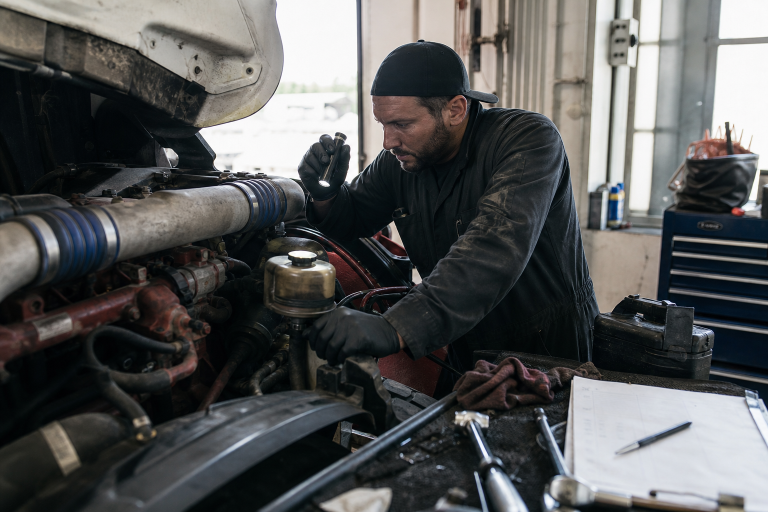
Inspect The Major Engine Systems
Cooling, Lubrication, And Airflow
Inspect the cooling system for coolant loss, pressure problems, damaged hoses, restricted radiator airflow, and signs of past overheating. Check oil condition and pressure with a reliable gauge when readings are questionable. Fuel dilution, coolant contamination, unusual metallic material, and heavy sludge all deserve prompt investigation. Then examine the air filter, intake plumbing, charge-air connections, turbocharger, and exhaust joints. A restriction or boost leak can reduce power and contribute to smoke or high exhaust temperature. Do not overlook basic items such as loose clamps, split hoses, and blocked coolers.
Fuel Delivery
Check fuel quality, water separation, filters, supply lines, pump operation, injectors, and return flow where applicable. Poor fuel delivery can mimic a more serious internal problem, so verify the system before condemning major engine components.
Recognize Common Warning Signs
A symptom is a starting point, not a diagnosis. Use inspection results to narrow the cause.
- Hard starting: Check battery condition, cranking speed, fuel supply, air intrusion, and cylinder condition.
- Blue smoke: Investigate oil consumption, turbocharger seals, valve guides, rings, liners, and intake contamination.
- White smoke: Check cold combustion, injector operation, coolant loss, compression, and operating temperature.
- Low oil pressure: Confirm the reading with a mechanical gauge before examining oil grade, pump condition, passages, and bearing wear.
- High blow-by: Measure crankcase pressure and inspect the breather system before deciding whether internal wear is excessive.
Repair, Rebuild, Or Replace?
A component repair can make sense when the failure is isolated, and the block, crankshaft, and cylinder structure remain serviceable. An in-frame or partial rebuild may be appropriate for an engine with wear in the liners, pistons, rings, bearings, or gaskets, provided critical measurements remain within the manufacturer’s limits. Complete replacement becomes more compelling when the block or crankshaft is severely damaged, multiple major systems have failed, or the machine needs predictable uptime quickly. Compare the full cost of each path, including parts, labor, fluids, machining, transport, testing, lost production, and the likelihood of additional repairs.
Create A Practical Maintenance Plan
Build service intervals around the actual environment and workload, not only calendar dates. Daily checks should include fluid levels, leaks, warning lights, gauges, new smoke, vibration, and unusual noise. Scheduled work should cover filters, coolant condition, belts, hoses, mounts, clamps, and wiring. Oil selection should follow the engine manufacturer’s required viscosity and performance category. The API diesel oil categories show why newer diesel oils are not automatically interchangeable with every older engine specification. In cold weather, prioritize batteries and starting systems. Before hot-weather work, confirm cooling airflow and radiator cleanliness.
Account For Emissions And Compliance
A mechanically healthy engine may still be unsuitable for a particular location, route, or worksite. Confirm current federal, state, local, registration, and jobsite requirements before changing the engine’s application or replacing major emissions-related components. The EPA explains that tampering with emission control devices on motor vehicles is prohibited, so repairs should preserve the required equipment rather than turn it off.
Plan For Parts And Downtime
Parts planning prevents a repair from stopping over a small but essential item. Record the exact engine model, serial number, rating, controls, accessories, and application. Confirm supplier lead times before teardown, then order seals, filters, fluids, hardware, and known wear items early. Match components to the specific configuration, not merely the engine family name.
Use A Pre-Purchase Checklist
- Verify serial numbers and build information.
- Request maintenance and rebuild records.
- Inspect for oil, fuel, and coolant leaks.
- Start the engine cold when possible.
- Observe smoke, idle quality, noise, and throttle response.
- Check oil pressure and coolant temperature under load.
- Look for overheating evidence and poor prior repairs.
- Confirm support for the exact engine configuration.
- Have an independent diesel technician inspect the equipment before purchase.
Make The Decision With Evidence
Legacy heavy-duty diesel engines can continue to provide useful service when their condition is understood, and their maintenance needs are managed. Inspection data, repair history, future workload, parts access, downtime exposure, and compliance requirements should all shape the decision. This approach helps owners avoid both premature replacement and expensive repairs that do not fit the machine’s real value.
Conclusion
Older heavy-duty diesel engines can remain useful when their mechanical condition, operating demands, and available support align. Age alone does not determine whether an engine should be repaired, rebuilt, replaced, or retired. A practical decision should be based on maintenance records, inspection findings, diagnostic results, workload, parts availability, downtime costs, and applicable compliance requirements.
Checking major systems such as cooling, lubrication, airflow, and fuel delivery can also help distinguish an isolated repair from broader engine wear. For owners considering used equipment, an independent inspection can provide additional information before a purchase. With accurate records, consistent maintenance, and evidence-based decisions, owners can better determine whether continuing to operate a legacy engine is practical or whether another powertrain option makes more sense.