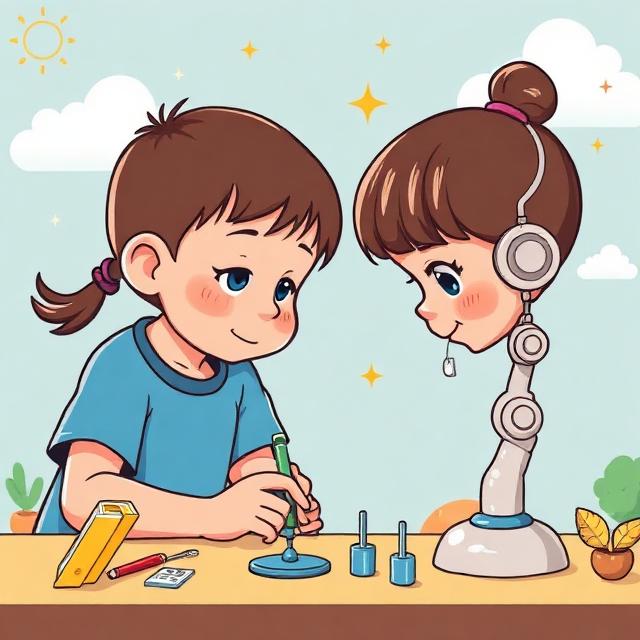
Artificial intelligence is no longer something children only hear about in science-fiction movies. From AI-powered search tools and educational apps to chatbots, games, and creative platforms, children are growing up around technology that can generate answers, images, stories, and even conversations.
That can be exciting—but it also creates new questions for parents.
Is AI safe for kids? How much AI should children use? What information should they share? And how can parents make sure AI becomes a learning tool rather than something children depend on too heavily?
The goal isn’t to keep kids away from AI completely. Instead, parents can teach children how to use it thoughtfully, safely, and responsibly.
This guide explains what parents should know about AI for kids, including online safety, privacy, responsible use, critical thinking, screen time, and practical ways to introduce children to artificial intelligence.
What Is Artificial Intelligence?
Artificial intelligence, commonly called AI, refers to technology that can perform tasks that usually require some form of human intelligence.
For children, AI might appear in familiar places without them even realizing it. Examples include:
- Voice assistants that answer questions
- Recommendation systems on video and music platforms
- Educational apps that personalize learning
- AI chatbots that answer questions
- Image and video creation tools
- Games that adapt to a player’s behavior
- Translation and writing tools
- Smart search features
Generative AI is a particularly important development for parents to understand. Tools powered by generative AI can create text, images, audio, code, and other content based on a user’s instructions.
For a child, this can feel almost magical. They can ask a question and receive an answer within seconds.
But AI doesn’t “know” everything, and it doesn’t always provide correct or appropriate information. That’s why learning how to use AI is just as important as learning what AI can do.
Why Should Parents Teach Kids About AI?
Children are likely to encounter AI whether or not their parents formally introduce it to them.
Simply banning every AI tool may not prepare children for the technology they will encounter at school, online, or later in their careers.
Instead, parents can help children develop good digital habits early.
Teaching kids about AI can help them:
- Understand how AI tools work at a basic level
- Recognize that AI can make mistakes
- Protect their personal information
- Think critically about AI-generated answers
- Use technology creatively
- Avoid becoming overly dependent on AI
- Understand responsible digital behavior
The most important lesson is simple: AI is a tool, not an authority.
Children should learn to question what AI tells them rather than automatically believing every response.
Is AI Safe for Kids?
AI can be useful for children, but safety depends heavily on the specific tool, the child’s age, and how the technology is being used.
Not every AI platform is designed for children. Some may collect information, generate inappropriate responses, or allow interactions that aren’t suitable for younger users.
Parents should therefore avoid assuming that an AI tool is automatically child-friendly simply because it is popular.
Before allowing a child to use an AI platform, consider:
- Is the service designed for or appropriate for the child’s age?
- Does it have parental controls?
- What information does it collect?
- Can the child interact with strangers?
- Does it provide content filters?
- Can conversations be reviewed or managed?
- Does the platform clearly explain its privacy practices?
For younger children especially, supervised use is generally a better starting point than completely independent access.
1. Teach Kids Never to Share Private Information
One of the most important AI safety lessons for children is protecting personal information.
Kids may not realize that seemingly harmless details can become sensitive when combined.
Teach children not to enter information such as:
- Full home address
- Phone number
- Passwords
- School login credentials
- Financial information
- Government identification numbers
- Private family information
- Exact daily routines
- Photos containing sensitive information
A useful rule for children is:
If you wouldn’t tell a stranger online, don’t type it into an AI tool.
Parents should also explain that deleting a conversation from an app does not necessarily mean every copy of the information instantly disappears from all systems.
2. Explain That AI Can Be Wrong
One of the biggest mistakes children can make is assuming that AI-generated information is always accurate.
AI systems can produce incorrect facts, misunderstand questions, invent sources, or confidently present information that sounds believable but isn’t true.
This is sometimes referred to as an AI “hallucination.”
For example, a child might ask an AI tool about a historical event and receive an answer that contains inaccurate dates or names.
That’s why children should develop the habit of asking:
“How do I know this is true?”
Encourage them to verify important information using reliable sources such as textbooks, teachers, libraries, official websites, and trusted educational resources.
This habit is useful far beyond AI. It teaches children how to become better digital researchers.
3. Teach Kids to Use AI for Learning—Not Cheating
AI can be an excellent learning assistant when used correctly.
A child struggling with mathematics could ask AI to explain a concept in simpler language. A student learning a new language could practice vocabulary. A child interested in science could ask for a simple explanation of how the solar system works.
The problem begins when AI does all the thinking.
For example, instead of asking AI to complete an entire homework assignment, children can use it to:
- Explain difficult concepts
- Generate practice questions
- Provide examples
- Help brainstorm ideas
- Quiz them on a topic
- Explain mistakes
- Suggest ways to improve their writing
The goal should be learning with AI rather than outsourcing learning to AI.
Parents can ask children, “What did you learn from the AI answer?” That simple question encourages them to stay actively involved.
4. Encourage Critical Thinking
AI literacy isn’t just about knowing how to operate an AI chatbot.
Children also need to understand how to evaluate what AI produces.
Ask your child questions such as:
- Does this answer make sense?
- Where did this information come from?
- Could the AI have misunderstood the question?
- Is there another point of view?
- Can we verify this somewhere else?
- Does the answer contain information that seems suspicious?
You can even turn AI mistakes into learning opportunities.
If an AI tool gives an incorrect answer, don’t immediately fix it for your child. Ask them to investigate what went wrong.
That turns an ordinary AI interaction into a critical-thinking exercise.
5. Set Age-Appropriate AI Rules
Children of different ages have very different levels of judgment and independence.
A younger child may need direct supervision, while an older teenager may be ready to manage AI tools more independently.
Instead of creating one rule for every child, consider age and maturity.
Younger Children
For younger kids, parents can:
- Use AI together
- Choose age-appropriate educational tools
- Keep sessions short
- Avoid unsupervised chatbot conversations
- Explain basic privacy rules
- Focus on creativity and exploration
Middle School Students
At this stage, children can begin learning about:
- AI-generated content
- Fact-checking
- Responsible prompting
- Online privacy
- AI-assisted homework
- Digital footprints
- Bias in technology
Teenagers
Older students can explore more advanced topics, including:
- AI ethics
- Algorithmic bias
- Deepfakes
- Copyright and plagiarism
- AI-generated misinformation
- Responsible use of AI for school and projects
- Career opportunities involving AI
The goal is gradual independence—not unlimited access from day one.
6. Talk About AI-Generated Images, Videos, and Deepfakes
Children increasingly encounter AI-generated media online.
Some AI tools can create realistic-looking people, voices, photographs, and videos that never actually existed.
This makes media literacy especially important.
Teach children that seeing something online doesn’t automatically make it real.
When they encounter surprising content, encourage them to:
- Stop before sharing it.
- Consider where it came from.
- Look for trustworthy reporting or additional sources.
- Check whether other reliable websites confirm the claim.
- Ask an adult or teacher when something seems suspicious.
Children should also understand that creating fake content about another person can hurt them—even if it was intended as a joke.
7. Discuss AI Bias With Kids
AI systems learn from data created by humans. That means AI can sometimes reflect biases or limitations found in the information it was trained on.
Older children can begin learning that AI isn’t completely neutral.
For example, an AI-generated answer might present one perspective while leaving out another. An image generator might also produce stereotypical representations.
You don’t need to turn this into a complicated technical lesson.
A simple explanation works:
“AI learns from information made by people, and people can make mistakes or have biases. That’s why we should think carefully about what AI tells us.”
This helps children understand that technology deserves thoughtful evaluation rather than blind trust.
8. Don’t Let AI Replace Creativity
One of the most exciting aspects of AI for kids is creativity.
Children can use AI to brainstorm:
- Story ideas
- Character concepts
- Science projects
- Art prompts
- Game ideas
- Writing topics
- Inventions
- Coding projects
But parents should encourage children to add their own imagination.
If AI writes an entire story, the child may simply become a reader of AI-generated content. If AI helps them brainstorm a story and the child develops the characters, plot, and writing, the technology becomes a creative partner.
There’s a big difference between the two.
AI should expand a child’s imagination—not replace it.
9. Watch for Overdependence on AI
Another concern parents should keep in mind is overreliance.
If a child starts using AI for every question, assignment, idea, or decision, they may gradually lose opportunities to practice independent thinking.
Look for signs such as:
- Asking AI before trying to solve a problem independently
- Copying AI responses without understanding them
- Using AI for every school assignment
- Avoiding creative work without AI assistance
- Treating AI answers as unquestionable facts
A useful household rule can be:
“Think first, then ask AI.”
Encourage children to attempt a problem themselves before turning to technology for help.
10. Balance AI With Screen-Free Activities
AI is still screen time.
Even if a child is using technology for educational purposes, it’s important to balance digital activities with offline experiences.
Encourage children to spend time:
- Reading physical books
- Playing outdoors
- Drawing
- Building things
- Talking with family
- Playing sports
- Doing hands-on experiments
- Exploring nature
- Playing board games
- Creating without digital assistance
Some of the best learning experiences don’t happen on a screen.
AI should be one tool in a child’s learning environment—not the entire environment.
How Parents Can Introduce AI at Home
You don’t need to be an AI expert to help your child develop responsible AI habits.
Start with simple activities.
For example, choose a topic your child enjoys and explore it together. Ask an AI tool to explain the subject at a child’s level. Then compare the response with a book or trusted educational website.
You can also ask AI to create a quiz and have your child check whether the questions and answers are correct.
Another fun activity is to ask AI for several ideas for a story and then let your child choose one and create the final story themselves.
These activities teach children something important: AI can help you think, but you still need to do the thinking.
A Simple AI Safety Checklist for Parents
Before allowing your child to use an AI tool, ask:
- Is the platform appropriate for their age?
- Have I reviewed its privacy settings?
- Does my child understand what information should remain private?
- Do they know that AI can make mistakes?
- Do they understand that AI-generated content isn’t automatically true?
- Have we discussed responsible use for schoolwork?
- Are they spending enough time away from screens?
- Do they know what to do if AI produces something disturbing or inappropriate?
These conversations don’t need to happen all at once. AI safety is an ongoing conversation as technology and your child’s maturity change.
The Future of AI and Children
AI will likely become increasingly common in education, workplaces, entertainment, and everyday life.
That means children don’t simply need to know how to use AI. They need to understand when to use it, when not to use it, and how to question its output.
The most valuable skills may not be technical skills alone.
Curiosity, creativity, communication, empathy, problem-solving, and critical thinking will remain important even as AI becomes more capable.
Parents have an opportunity to help children develop those skills alongside AI literacy.
Final Thoughts
AI can be an incredible learning and creativity tool for children when it is introduced thoughtfully.
The goal isn’t to make kids afraid of artificial intelligence or to give them unlimited access to it. The better approach is to teach them how to use technology with curiosity, caution, and common sense.
Start small. Explore AI together. Talk about privacy. Encourage fact-checking. Set age-appropriate boundaries. Most importantly, remind children that AI is there to support their thinking—not replace it.
When kids learn to use AI responsibly, they aren’t just learning about a new technology. They’re developing the digital judgment they’ll need for the future.
Frequently Asked Questions
1. What age should kids start learning about AI?
There isn’t one perfect age for every child. Younger children can learn basic ideas about technology and AI through supervised activities, while older children can explore topics such as generative AI, privacy, misinformation, and AI ethics in greater depth. The type of AI activity should always be appropriate for the child’s age and maturity.
2. Is AI safe for children?
AI can be useful for children, but not every AI platform is designed for them. Parents should check age requirements, privacy practices, safety features, content controls, and how the service handles children’s information before allowing use.
3. Can kids use AI for homework?
AI can support learning when children use it to understand concepts, brainstorm ideas, practice skills, or receive explanations. However, children shouldn’t simply submit AI-generated work as their own. Parents and teachers should encourage students to understand and contribute to the final work.
4. How can parents protect children’s privacy when using AI?
Teach children never to share passwords, addresses, phone numbers, school login information, financial details, or other sensitive personal information with AI tools. Parents should also review the platform’s privacy policy and available settings before allowing their child to use it.
5. How can parents prevent children from becoming dependent on AI?
Encourage children to try solving problems themselves before asking AI for assistance. Make room for reading, outdoor play, creative activities, conversations, and hands-on learning. A simple rule like “think first, then ask AI” can help children maintain independent thinking skills.
Conclusion
AI is becoming part of childhood faster than many parents expected. Instead of treating that change as something to fear, families can use it as an opportunity to teach children better digital habits.
With the right boundaries and guidance, AI for kids can encourage curiosity, creativity, research, and problem-solving while helping children prepare for a technology-driven future.
The key is balance: use AI, question AI, learn from AI—but don’t let AI do all the thinking.