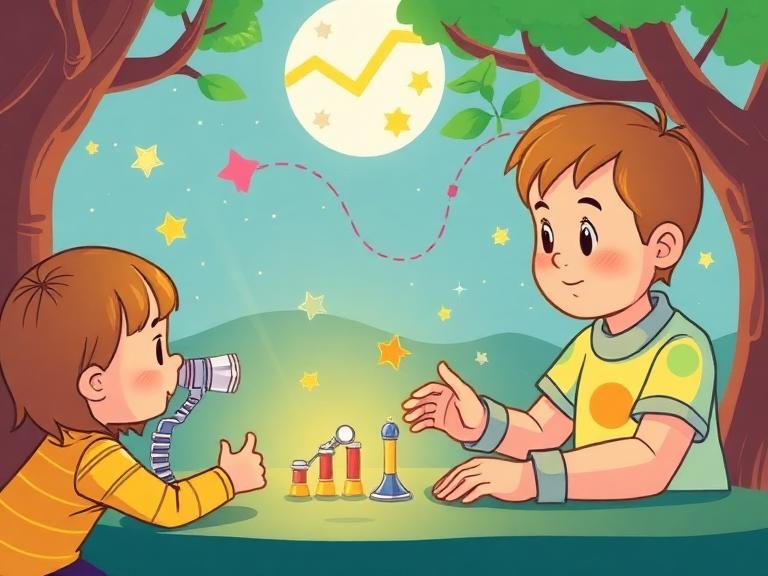
Artificial intelligence is no longer something that exists only in science fiction movies or high-tech laboratories. Today, AI is becoming part of everyday life, and children are growing up around tools that can answer questions, create pictures, explain difficult topics, and even help with homework.
But what exactly does AI for kids mean? Is artificial intelligence safe for children? And how can parents and teachers make sure kids use AI as a learning tool rather than simply relying on it for answers?
When introduced properly, AI can be an exciting way for children to explore new ideas, develop creativity, and understand technology. The key is making sure children use it responsibly and with appropriate guidance.
What Is AI for Kids?
AI for kids simply means introducing children to the basic concepts and practical uses of artificial intelligence in an age-appropriate way.
Children do not need to understand complicated programming languages or advanced mathematics to start learning about AI. They can begin with simple activities such as asking an AI tool to explain a science concept, creating a story, identifying patterns, or learning how voice assistants work.
The goal isn’t to turn every child into an AI programmer. Instead, it’s about helping kids understand how artificial intelligence works, what it can do, and where its limitations are.
For example, a child might ask an AI tool:
- “Explain the water cycle like I’m 10 years old.”
- “Give me ideas for a science project.”
- “Help me create a story about a robot.”
- “Why does the moon appear to change shape?”
- “Teach me three interesting facts about dinosaurs.”
These activities can turn technology into an interactive learning experience.
Why Should Kids Learn About Artificial Intelligence?
AI is likely to play an important role in the future workplace. Children who understand basic AI concepts early may be better prepared for a world where technology is used across education, business, healthcare, entertainment, science, and many other industries.
However, the biggest benefit isn’t simply learning how to use AI tools.
Learning about AI can help children develop important skills such as:
1. Critical Thinking
AI can sometimes provide incorrect, incomplete, or misleading information. Teaching children to question AI-generated answers encourages them to think critically instead of accepting everything they see online.
2. Creativity
AI can help children brainstorm characters, stories, inventions, artwork concepts, and project ideas. Kids can use these suggestions as starting points and then add their own imagination.
3. Problem-Solving
AI can be used to break complicated problems into smaller steps. Children can experiment with different questions and approaches while learning how to solve problems independently.
4. Digital Literacy
Understanding AI gives children a better idea of how modern digital tools work. This can become an important part of overall digital literacy.
5. Curiosity
Perhaps one of the biggest advantages is simple curiosity. AI allows children to ask questions about almost anything, which can encourage them to explore subjects beyond the classroom.
How Can AI Help Children Learn?
AI can support learning in many different ways when it is used appropriately.
Personalized Explanations
Every child learns differently. One student may understand a concept after reading a textbook, while another may need a simple example or visual explanation.
AI can explain the same concept in different ways. For instance, a child struggling with fractions could ask for an explanation using pizza slices, toys, or everyday objects.
Language Learning
AI tools can help children practice vocabulary, grammar, sentence formation, and conversations in different languages.
Instead of simply memorizing words, children can practice using them in realistic situations.
Creative Writing
Children can use AI to brainstorm story ideas, develop characters, or overcome writer’s block.
For example, a child could start with the idea of a young explorer discovering a hidden city. AI could suggest possible settings and characters, while the child writes the actual story.
This approach keeps the child’s creativity at the center.
Science and Mathematics
AI can explain difficult scientific and mathematical concepts using simple examples.
A student learning about gravity, electricity, ecosystems, or geometry can ask follow-up questions until the concept becomes easier to understand.
Coding and Technology
Older children can also use AI to explore basic programming concepts. AI can explain what pieces of code do, identify simple errors, or suggest beginner-friendly coding exercises.
Parents should encourage children to understand the code rather than simply copy and paste it.
Fun AI Activities for Kids
Learning about artificial intelligence doesn’t have to feel like another school assignment.
Here are some activities parents and teachers can try:
Create an AI-powered story: Ask an AI tool to suggest a story idea and let the child develop the characters and ending.
AI fact-checking game: Give children an AI-generated answer and ask them to determine which facts need verification.
Design an invention: Ask AI for ideas for a futuristic invention, then have the child draw or build a model of it.
Learn about robots: Explore how robots use sensors, cameras, and AI to interact with their surroundings.
Pattern recognition games: Introduce children to simple examples of how AI identifies patterns in images, sounds, or numbers.
These activities can make AI education more hands-on and enjoyable.
Is AI Safe for Kids?
AI can be useful for children, but it should not be treated as completely risk-free.
Parents and educators should consider several issues, including privacy, inappropriate content, misinformation, and excessive dependence on AI.
Children should understand that they should never share sensitive personal information with an AI tool. This can include their home address, passwords, private school information, phone number, or other personal details.
Parents should also check the age requirements and privacy policies of the specific AI service before allowing a child to use it.
Most importantly, younger children should use AI with appropriate adult supervision.
Should Kids Use AI for Homework?
AI can be useful for homework, but there is an important difference between using AI to learn and using AI to avoid learning.
For example, asking AI to explain a difficult math problem can be helpful. Asking it to complete an entire assignment and submitting the answer as your own is a different matter.
A better approach is to encourage children to:
- Try the problem themselves.
- Ask AI for an explanation if they get stuck.
- Compare the explanation with their textbook or teacher’s guidance.
- Rewrite the answer in their own words.
- Check important information independently.
This teaches children how to use AI as a learning assistant rather than a shortcut.
Teaching Kids to Question AI Answers
One of the most important lessons children can learn is that AI isn’t always right.
Artificial intelligence generates responses based on patterns in information and instructions. It can make mistakes, misunderstand questions, or provide outdated information.
Parents can turn this into a learning opportunity.
Instead of saying, “AI knows everything,” teach children to ask:
- Where did this information come from?
- Does this answer make sense?
- Can I find the same information from a trusted source?
- Is there another explanation?
- Could the AI have made a mistake?
These habits can help children become smarter and more responsible technology users.
AI and Children’s Creativity
There is an understandable concern that AI could make children less creative. However, the outcome depends largely on how the technology is used.
If children ask AI to write every story, solve every problem, and create every project, they may miss opportunities to practice their own skills.
But if AI is used for brainstorming and exploration, it can actually encourage creativity.
For example, a child could ask AI for ten ideas for a fantasy story and then choose one, change the characters, invent a new world, and write the story independently.
The child remains the creator. AI simply becomes another tool.
How Parents Can Introduce AI to Children
Parents don’t need to be technology experts to help children learn about AI.
Start with simple conversations. Explain that AI is a type of technology designed to recognize patterns, process information, and perform tasks that normally require some form of human intelligence.
Then demonstrate AI through everyday examples.
You might discuss voice assistants, recommendation systems on streaming platforms, search engines, translation tools, smart cameras, or educational applications.
Set clear boundaries around privacy and screen time, and encourage children to ask questions about how the technology works.
Most importantly, keep the conversation open. Children should feel comfortable telling parents when they encounter something confusing or inappropriate while using technology.
The Future of AI Education for Kids
AI education is likely to become increasingly important as artificial intelligence becomes more common in schools, workplaces, and everyday technology.
Children don’t necessarily need advanced technical skills at an early age. What they need is a strong foundation in curiosity, critical thinking, creativity, digital responsibility, and problem-solving.
Teaching these skills alongside basic AI concepts can help children become confident technology users without becoming overly dependent on technology.
The future isn’t simply about knowing how to use AI. It’s about knowing when to use it, how to question it, and how to use it responsibly.
Final Thoughts
AI for kids can be a powerful educational opportunity when it is introduced thoughtfully. From helping children understand difficult subjects to encouraging storytelling, coding, creativity, and curiosity, artificial intelligence can make learning more interactive.
At the same time, children need guidance. AI should support their thinking rather than replace it.
The best approach is simple: let kids explore, encourage them to ask questions, teach them to verify information, protect their privacy, and make sure their own imagination remains at the heart of the learning process.
When used responsibly, AI can become more than just another piece of technology. It can become a tool that helps children learn, experiment, create, and prepare for the future.
Frequently Asked Questions About AI for Kids
1. What is AI for kids?
AI for kids is the age-appropriate introduction of artificial intelligence concepts and tools to children. It can include simple AI experiments, educational activities, coding, robotics, creative projects, and guided use of AI-powered learning tools.
2. Is artificial intelligence safe for children?
AI can be used safely by children when parents and educators provide appropriate supervision. Children should avoid sharing personal information, understand that AI can make mistakes, and use services that are appropriate for their age.
3. At what age should kids learn about AI?
There isn’t one specific age for learning about AI. Young children can start with simple concepts such as patterns, robots, and voice recognition, while older children can explore machine learning, coding, and more advanced AI concepts.
4. Can AI help kids with homework?
Yes. AI can help children understand difficult topics, brainstorm ideas, practice skills, and receive explanations. However, children should use AI as a learning aid rather than relying on it to complete and submit their assignments.
5. How can parents teach kids to use AI responsibly?
Parents can teach children to protect their personal information, verify AI-generated information, follow age restrictions, avoid inappropriate content, and think independently. Setting clear boundaries and discussing AI use regularly can also encourage responsible habits.